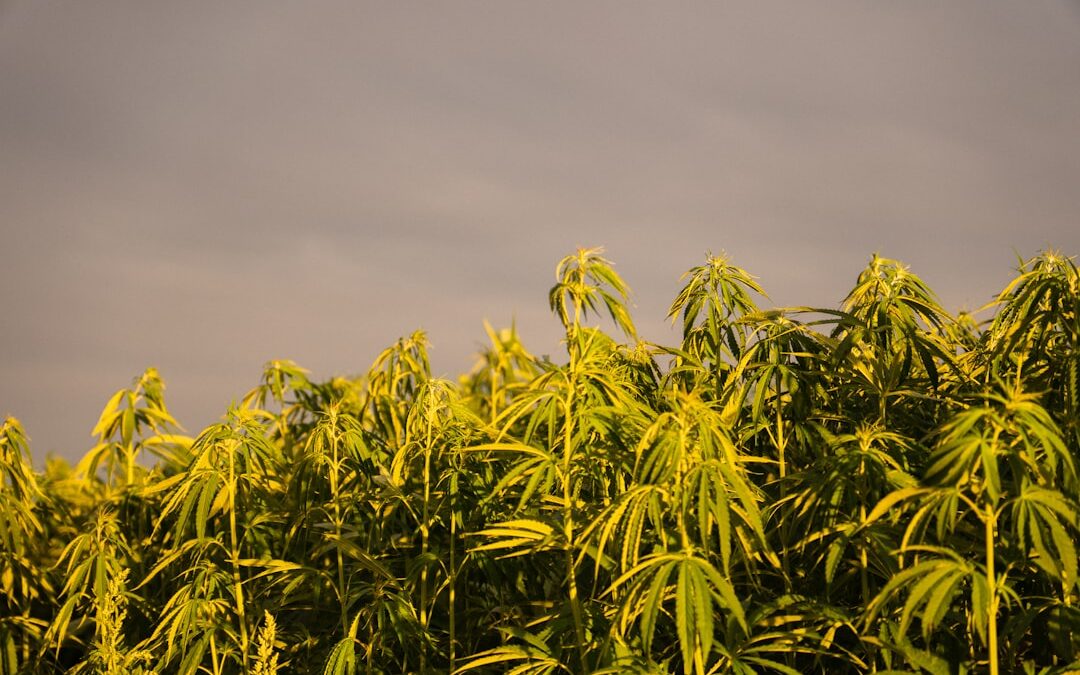
USDA Report Shows U.S. Hemp Industry Hit $739 Million in 2025, Up 64% Year Over Year
Floral hemp accounted for nearly 90% of all outdoor hemp value as American farmers planted more acreage and harvested bigger yields across every category.
By CBDWorldNews Editorial Staff | April 30, 2026
The U.S. hemp industry posted its strongest performance since federal legalization, with total production value climbing to $739 million in 2025 — a 64% increase from the previous year. The data, published April 16 by the U.S. Department of Agriculture’s National Agricultural Statistics Service (NASS), paints a picture of an industry that rebounded sharply after several years of contraction and uncertainty.
The numbers arrive at a particularly charged moment. With federal legislation threatening to redefine hemp in ways that could eliminate most CBD products from the legal market by November, the USDA report serves as both a progress report and a warning about what’s at stake.
Floral Hemp Dominates the Market
The headline story is floral hemp’s continued dominance. Outdoor floral hemp production reached 33.2 million pounds in 2025, a 60% increase from 2024. The total value of that harvest hit $574 million, accounting for nearly 90% of all outdoor hemp value.
This category includes the flower and biomass used to produce CBD oils, tinctures, gummies, and other consumer products. It also includes THCA-dominant flower sold directly to consumers in states where it’s legal.
Total outdoor hemp value across all categories reached $646 million, a 53% year-over-year jump. American farmers planted 49,267 acres of hemp in 2025, a 9% increase from the prior year.
“The 2025 numbers show an industry that found its footing after years of volatility. The question now is whether federal policy lets it keep growing.” — U.S. Hemp Roundtable statement
Growth Across Every Category
While floral hemp grabbed most of the value, every production category posted strong gains.
Grain hemp more than doubled its output to 7.26 million pounds, a 112% increase. The value of grain hemp surged 209% to $8.09 million. Grain hemp is used in food products, animal feed, and nutritional supplements — a segment that faces fewer regulatory headwinds than cannabinoid products.
Seed hemp production rose 190% to 2.03 million pounds, with total value climbing to $49.7 million — up 193% from 2024. This category supplies the genetics that underpin the broader industry.
Fiber hemp, used in textiles, building materials, and industrial applications, also posted gains, though the report shows it remains a small fraction of total value.
Indoor Cultivation Explodes
One of the most striking data points involves hemp grown under protected cultivation — greenhouses, indoor facilities, and other controlled environments. Hemp clones and transplants grown under protection totaled 1.08 million plants in 2025, a 203% increase from the prior year. The value of those crops hit $1.96 million, a 339% annual rise.
The surge in protected cultivation reflects the industry’s move toward higher-value, precision-grown products. Indoor operations can control variables like light, temperature, and humidity, producing flower with more consistent cannabinoid profiles — exactly what premium CBD product manufacturers require.
The Tension With Federal Policy
The USDA data makes the current federal policy debate more urgent. An industry generating $739 million in farm-gate value supports processing facilities, retail operations, and a supply chain that multiplies that number several times over. The $28 billion figure cited by MJBizDaily for the total hemp-derived market includes retail sales of finished products.
If Section 781 takes effect in November without a congressional fix, the floral hemp category that drives 90% of outdoor value would be the hardest hit. Most CBD products made from floral hemp contain trace amounts of THC that would exceed the new 0.4-milligram-per-container cap.
The report also undermines the argument that hemp is a niche agricultural curiosity. At $739 million, hemp production value exceeds several traditional commodity crops at the state level. For farmers in states like Montana, Colorado, and Oregon, hemp has become a meaningful part of the agricultural economy.
What the Data Means for Pet CBD
The growth in floral hemp production also feeds the expanding pet CBD market, which industry analysts project will reach $576 million in 2026. Pet CBD products rely on the same supply chain as human products, and any disruption to floral hemp production would ripple through the animal wellness segment.
Looking Ahead
The 2025 data suggests American hemp farming has entered a more mature phase. The boom-and-bust cycle of 2019-2023 — when thousands of farmers rushed in, crashed prices, and then exited — appears to have settled. The farmers still growing hemp are doing so profitably, with better genetics, more efficient processing, and established market relationships.
Whether that trajectory continues depends almost entirely on what happens in Washington over the next six months. The USDA’s own data makes the case that there’s a lot to lose.
These statements have not been evaluated by the Food and Drug Administration. CBD products are not intended to diagnose, treat, cure, or prevent any disease.


