Bipartisan Bill Would Push Federal Hemp Product Ban to November 2028
The Hemp Planting Predictability Act gives Congress breathing room to write permanent rules instead of killing an industry by default
By CBDWorldNews Editorial Staff | April 21, 2026
A bipartisan bill introduced in January aims to delay the federal ban on most hemp-derived cannabinoid products by two years, buying time for Congress to craft permanent regulations rather than letting the industry hit a wall in November.
The Legislation
The Hemp Planting Predictability Act (H.R. 7024), introduced by Representative Baird (R-IN) with bipartisan co-sponsors, targets Section 781 of Division B in the 2026 Extensions Act. That section is set to make the vast majority of hemp-derived cannabinoid products federally unlawful on November 12, 2026.
The bill’s mechanism is straightforward: it replaces “365 days” in the implementation language with “3 years,” pushing the effective date to November 12, 2028.
Under the current law, hemp is redefined as Cannabis sativa L. with a total THC concentration—including THCA and delta-8 THC—of no more than 0.3% on a dry weight basis. Finished products face a ceiling of 0.4 milligrams of total THC per container. That limit would make most gummies, tinctures, beverages, and edibles currently on the market illegal overnight.
What the Industry Faces
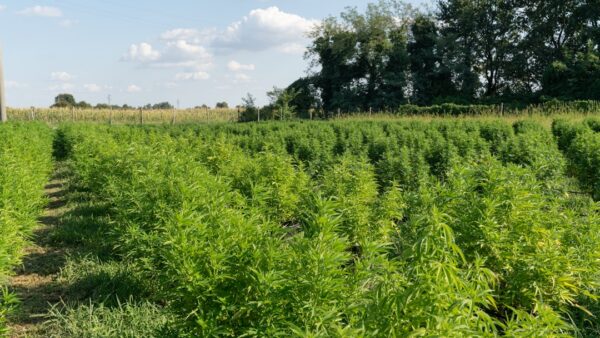
The hemp-derived cannabinoid market has grown to an estimated $28 billion, driven largely by products that would fail the new THC threshold. A CBS Minnesota report described a $180 million hemp THC drinks and edibles segment alone that faces elimination under the November deadline.
Hemp advocates recently traveled to Washington to lobby lawmakers, arguing that the November ban would destroy businesses before Congress has a chance to discuss, improve, and vote on regulatory language that actually works.
The industry’s position is clear: regulate us, but don’t erase us while you figure out how.
The 2026 Farm Bill is advancing through committee, but the intoxicating hemp ban language has remained unchanged in its latest version. That means even if the Farm Bill passes, it would not override Section 781 without specific amendments.
The Compliance Problem
For businesses trying to plan inventory, staffing, and operations, the November deadline creates what legal analysts have called a “compliance cliff.” Companies cannot reformulate products, restructure supply chains, and obtain new testing certifications in seven months—especially when the final regulatory framework has not been written.
Unsold hemp inventory presents another challenge. Products manufactured under current legal standards could become contraband on November 12, leaving businesses holding stock they cannot sell, return, or legally transport across state lines.
Companies that invest in third-party lab testing and compliance documentation now are better positioned for whatever regulatory framework emerges, but the uncertainty makes every investment a gamble.
Where It Stands
H.R. 7024 faces the same legislative bottleneck as every hemp-related bill: congressional attention is limited, and cannabis policy remains politically complicated. The bill needs committee hearings, markup, floor votes in both chambers, and a presidential signature—all before November 12.
Meanwhile, Representative Morgan Griffith (R-VA) has introduced separate legislation to establish a first-of-its-kind regulatory framework for hemp-derived products. That approach would create permanent rules rather than simply delaying the ban, but it faces an even longer path to passage.
The two approaches are not mutually exclusive. The delay bill buys time; the framework bill fills the gap. The industry needs both.
What to Watch
The April 23 Texas hemp hearing, the outcome of the Medicare CBD lawsuit, and any movement on H.R. 7024 in committee will shape the next several weeks. For businesses selling hemp-derived CBD products, the legislative calendar is now the most important factor in long-term planning.
The November cliff is real. Whether Congress builds a bridge or lets the industry fall depends on what happens in the next six months.
These statements have not been evaluated by the Food and Drug Administration. CBD products are not intended to diagnose, treat, cure, or prevent any disease.