James MacKillop and Jason W. Busse
McMaster University, Michael G. DeGroote National Pain Centre (MGD NPC)
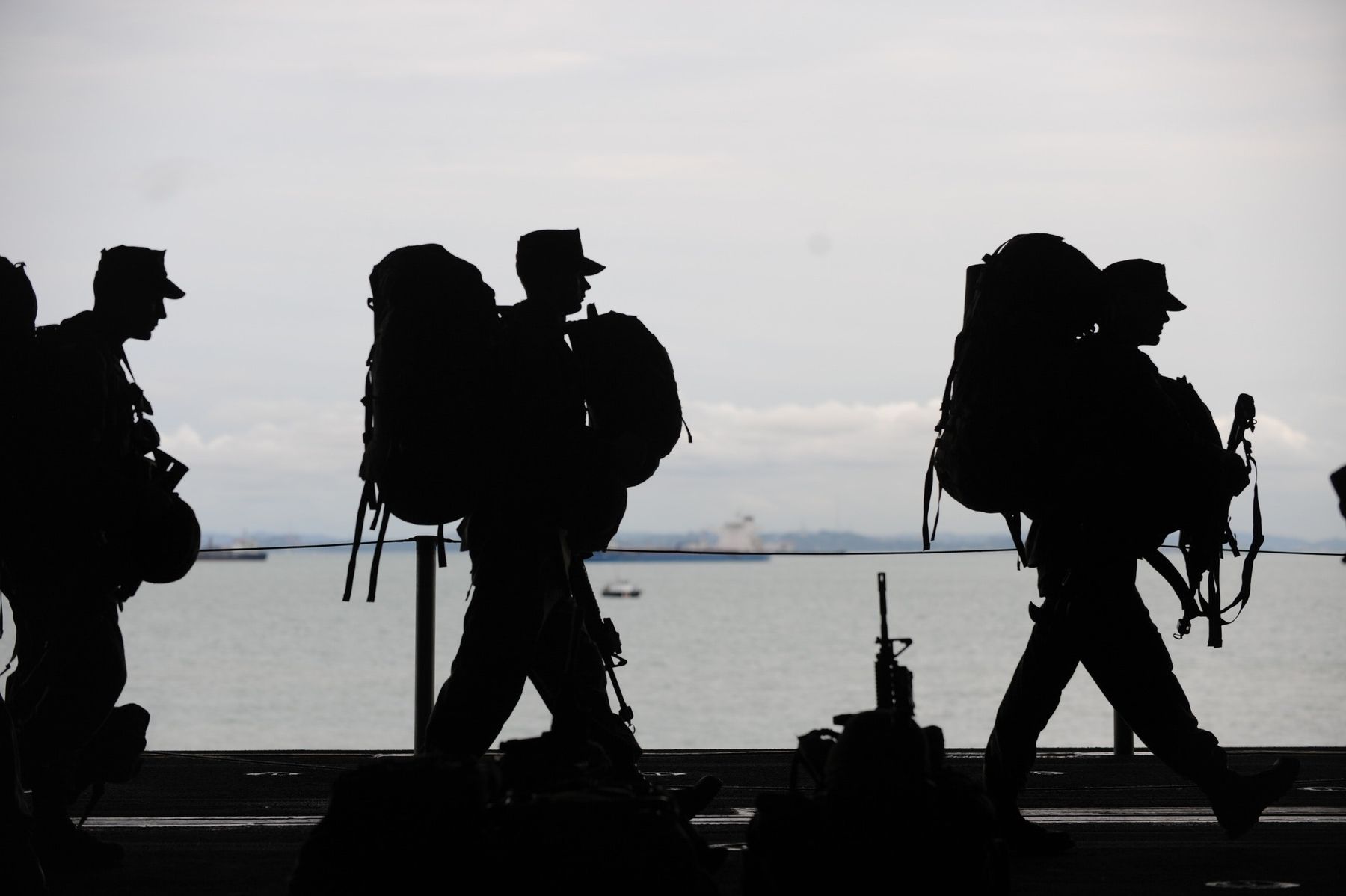
Dramatic changes in the regulation of cannabis have taken place over the last five years in Canada. Although access to cannabis for certain medical conditions has been legal since 2001, legislative changes in 2014 and 2017 substantially increased access and produced a network of regulated suppliers. Since then, authorizations for medical cannabis have skyrocketed from approximately 8,000 in 2014 to over 230,000 in 20171, an approximately 3000% increase. Beyond medical cannabis, at the time of this writing, Bill C-45, the Cannabis Act, will take effect on October 17, 2018, officially making access to cannabis for personal consumption legal for adults nationwide. Although Veterans represent a relatively small segment of the Canadian population, they are disproportionately affected by cannabis regulation. This Guest Editorial will concisely lay out the reasons why this is the case and argue that there is an urgent need for a comprehensive research program on cannabis use, both medicinal and non-medicinal, in Veterans.
Cannabis regulation differentially impacts Veterans as they are disproportionately affected by certain medical conditions as a result of their military service, most notably chronic pain and post-traumatic stress disorder (PTSD), for which medical cannabis is considered a promising treatment. In a recent survey of Canadian Veterans, 41% reported constant chronic pain and 23% reported intermittent chronic pain2 and chronic pain increased the likelihood of disability more than tenfold3. Rates of PTSD have been found to range from 7.5%–13.1%, five to tenfold higher than the general population4. Moreover, rates of cannabis use among Canadian Veterans seeking PTSD treatment are more than 50% and approximately one-quarter report initiating cannabis use following a traumatic event5. Although the evidence for the therapeutic efficacy of cannabis is insufficient for most conditions, there is moderate-quality evidence for pain relief 6,7. For PTSD there is little controlled evidence supporting cannabis as an effective treatment, although observational findings are promising8,9. Intriguingly, in studies on population-level administrative data, legalization of medical cannabis is associated with reductions in opioid, antidepressant and anti-anxiety prescriptions10,11, which bears on both pain and PTSD. These clinical findings are far from definitive, but nonetheless offer a basis for considering cannabis a promising treatment of these conditions.
There are also significant reasons for caution, namely, both well-established and potential risks of cannabis use. Acutely, cannabis is known to cause motor impairment that increases the risk of car accidents12,13. Chronic use can lead to cannabis use disorder (CUD; addiction), which affects ~7% of the population over the lifespan14–16; cognitive deficits17; increased risk for psychotic disorders18; and bronchitis19. Addressing self-harm and suicide in Canadian Veterans is a very high priority 20 and, in United States (US) samples, CUD has been associated with self-harm and suicidal behaviour21–23. A link between cannabis use and suicidality has been also detected in civilian US samples24,25.
Thus, if medical applications prove to be unsupported or legalization provokes greater overall use in Veterans, the risks of cannabis use may outweigh the benefits. As over 7,000 Canadian Veterans are currently authorized to use medical cannabis, this is not a trivial concern. A cautionary tale can be found in the initially excessively optimistic perspectives on novel opioids in the treatment of chronic noncancer pain and the current opioid epidemic26. It is critical that the same mistakes not be repeated by assuming cannabis is benign; its risks may be lower relative to other drugs, such as opioids, but they are by no means trivial.
In sum, it is no longer a matter of whether medical cannabis will become widely available or if recreational cannabis will become legal in Canada, and with these tectonic shifts in cannabis regulation, Veterans and their families have a great deal to potentially gain and lose. Given these facts, it is all the more important to develop a comprehensive research program to systematically ad dress the potential benefits and harms of cannabis use in Veterans. At the Michael G. DeGroote Centre for Medicinal Cannabis Research, our vision is an evidence-based understanding of medical cannabis, encompass ing both its potential therapeutic effects and associated risks. To achieve this, we are actively curating the collective body of knowledge on our web portal (https:// cannabisresearch.mcmaster.ca/), conducting innovative research projects to advance scientific discovery, and creating a network of McMaster faculty and external partners, including the Canadian Institute for Military and Veteran Health Research. Across these activities, we recognize the disproportionate relevance to Veterans and are specifically prioritizing understanding the impacts of cannabis on veteran health and wellbeing.
James MacKillop, Ph.D. & Jason W. Busse, DC, PhD
Director and Associate Director of the Michael G. DeGroote Centre for Medicinal Cannabis Research, McMaster University, and St. Joseph’s Healthcare Hamilton
References:
- Canada H. Market data on cannabis authorizations. (2018). Available at: https://www.canada.ca/en/ health-canada/services/drugs-medication/cannabis/ licensed-producers/market-data.html.
- VanDenKerkhof EG, VanTil L, Thompson JM, et al. Pain in Canadian Veterans: analysis of data from the Survey on Transition to Civilian Life. Pain Res Manag. 2015;20(2):89–95. https://doi. org/10.1155/2015/763768. Medline:25602711
- Thompson JM, Pranger T, Sweet J, et al. Disability correlates in Canadian Armed Forces Regular Force Veterans. Disabil Rehabil. 2015;37(10):884–91. https://doi.org/10.3109/09638288.2014.947441. Medline:25203768
- Thompson JM, VanTil LD, Zamorski MA, et al. Mental health of Canadian Armed Forces Veterans: a review of population studies. J Mil Veteran Fam Health. 2016;2(1):70–86. https://doi.org/10.3138/ jmvfh.3258.
- Sterniczuk R, Whelan J. Cannabis use among Canadian Armed Forces Veterans. J Mil Veteran Fam Health. 2016;2(2):43–52. https://doi.org/10.3138/ jmvfh.3836.
- Whiting PF, Wolff RF, Deshpande S, et al. Cannabinoids for medical use: a systematic review and meta-analysis. JAMA. 2015;313(24):2456–73. https://doi.org/10.1001/jama.2015.6358. Medline:26103030
- National Academies of Sciences. The Health Effects of Cannabis and Cannabinoids. National Academies Press; 2017., 10.17226/24625.
- Walsh Z, Gonzalez R, Crosby K, et al. Medical can nabis and mental health: A guided systematic review. Clin Psychol Rev. 2017;51:15–29. https://doi. org/10.1016/j.cpr.2016.10.002. Medline:27816801
- Turna J, Patterson B, Van Ameringen M. Is can nabis treatment for anxiety, mood, and related disorders ready for prime time? Depress Anxiety. 2017;34(11):1006–17. https://doi.org/10.1002/ da.22664. Medline:28636769
- Bradford AC, Bradford WD. Medical marijuana laws reduce prescription medication use in Medicare Part D. Health Aff (Millwood). 2016;35(7):1230–6. https://doi.org/10.1377/hlthaff.2015.1661. Medline:27385238
- Bradford AC, Bradford WD, Abraham A, et al. Association between US state medical cannabis laws and opioid prescribing in the Medicare Part D popu lation. JAMA Intern Med. 2018;178(5):667–72. https://doi.org/10.1001/jamainternmed.2018.0266. Medline:29610897
- Ramaekers JG, Berghaus G, van Laar M, et al. Dose-related risk of motor vehicle crashes after cannabis use. Drug Alcohol Depend. 2004;73(2):109–19. https://doi.org/10.1016/j.drugalcdep.2003.10.008. Medline:14725950
- Asbridge M, Hayden JA, Cartwright JL. Acute cannabis consumption and motor vehicle collision risk: a systematic review of observational studies and meta-analysis. BMJ. 2012;344(feb09 2):e536. https://doi.org/10.1136/bmj.e536. Medline:22323502
- Stinson FS, Ruan WJ, Pickering R, et al. Cannabis use disorders in the USA: prevalence, correlates and co-morbidity. Psychol Med. 2006;36(10):1447–60. https://doi.org/10.1017/S0033291706008361. Medline:16854249
- Hasin DS, Kerridge BT, Saha TD, et al. Prevalence and correlates of DSM-5 cannabis use disorder, 2012-2013: Findings from the National Epidemio logic Survey on Alcohol and Related Conditions-III. Am J Psychiatry. 2016;173(6):588–99. https:// doi.org/10.1176/appi.ajp.2015.15070907. Med line:26940807
- Canada S. Health at a glance: mental and substance use disorders in Canada – Findings from the Canadian Community Health Survey – Mental Health (CCHS – MH). (2012). Available at: https://www150.statcan.gc.ca/n1/ pub/82-624-x/2013001/article/11855-eng.htm.
- Broyd SJ, van Hell HH, Beale C, et al. Acute and chronic effects of cannabinoids on human cognition – A systematic review. Biol Psychiatry. 2016;79(7):557– 67. https://doi.org/10.1016/j.biopsych.2015.12.002. Medline:26858214
- Marconi A, Di Forti M, Lewis CM, et al. Meta-analysis of the association between the level of cannabis use and risk of psychosis. Schizophr Bull. 2016;42(5):1262–9. https://doi.org/10.1093/schbul/sbw003. Medline:26884547
- Yayan, J. & Rasche, K. in Advances in experimental medicine and biology 952, 31–34 (2016).
- Sareen J, Holens P, Turner S, et al. Report of the 2016 Mental Health Expert Panel on suicide prevention
in the Canadian Armed Forces. J Mil Veteran Fam Health. 2018;4(1):70–89. https://doi.org/10.3138/ jmvfh.2017-0043. - Kimbrel NA, Newins AR, Dedert EA, et al, and the VA Mid-Atlantic MIRECC Workgroup. Cannabis use disorder and suicide attempts in Iraq/Afghanistan era Veterans. J Psychiatr Res. 2017;89:1–5. https://doi.org/10.1016/j.jpsychires.2017.01.002. Medline:28129565
- Kimbrel NA, Meyer EC, DeBeer BB, et al. The impact of cannabis use disorder on suicidal and nonsuicidal self-injury in Iraq/Afghanistan-era Veterans with and without mental health disorders. Suicide Life Threat Behav. 2018;48(2):140–8. https://doi.org/10.1111/ sltb.12345. Medline:28295524
- Bohnert KM, Ilgen MA, Louzon S, et al. Substance use disorders and the risk of suicide mortality among men and women in the US Veterans Health Administration. Addiction. 2017;112(7):1193–201. https://doi. org/10.1111/add.13774. Medline:28301070
- Harford TC, Chen CM, Kerridge BT, et al. Self- and other-directed forms of violence and their relation ship with lifetime DSM-5 psychiatric disorders: Results from the National Epidemiologic Survey on Alcohol-Related Conditions-III (NESARC III). Psychiatry Res. 2018;262:384–92. https:// doi.org/10.1016/j.psychres.2017.09.012. Med line:28939392
- Shalit N, Shoval G, Shlosberg D, et al. The association between cannabis use and suicidality among men and women: A population-based longitudinal study. J Affect Disord. 2016;205:216–24. https://doi.org/10.1016/j. jad.2016.07.010. Medline:27449554
- Van Zee A. The promotion and marketing of oxycontin: commercial triumph, public health tragedy. Am J Public Health. 2009;99(2):221–7. https://doi.org/10.2105/ AJPH.2007.131714. Medline:18799767
Author Information:
James MacKillop, Ph.D., is Director of the Michael G. DeGroote Centre for Medicinal Cannabis Research and Director of the Peter Boris Centre for Medicinal Cannabis Research at McMaster University and St. Joseph’s Healthcare Hamilton. Dr. MacKillop is also a faculty member in the Department of Psychiatry and Behavioural Neurosciences at McMaster University.
Jason Busse, Ph.D., is Associate Director of the Michael G. DeGroote Centre for Medicinal Cannabis Research at McMaster University and St. Joseph’s Healthcare Hamilton. Dr. Busse is also a faculty member in the Department of Anaesthesia and the Department of Health Research Methods, Evidence, and Impact at McMaster University.